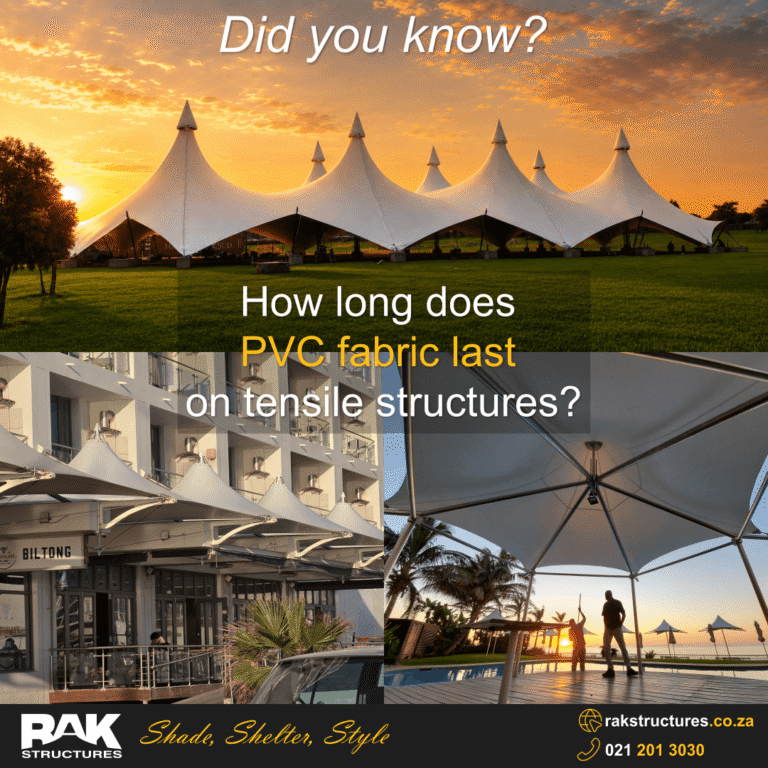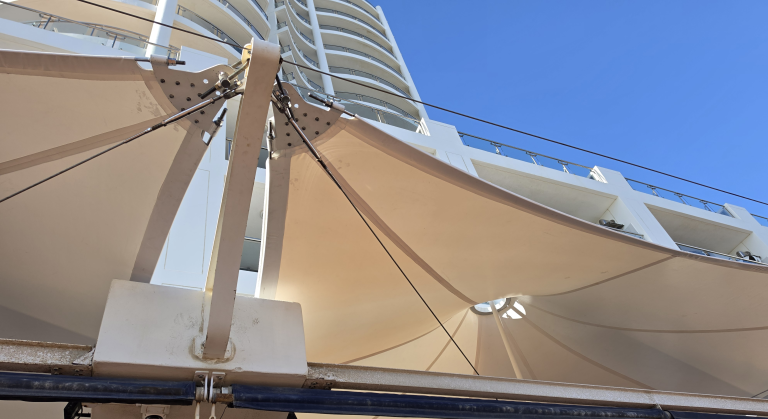
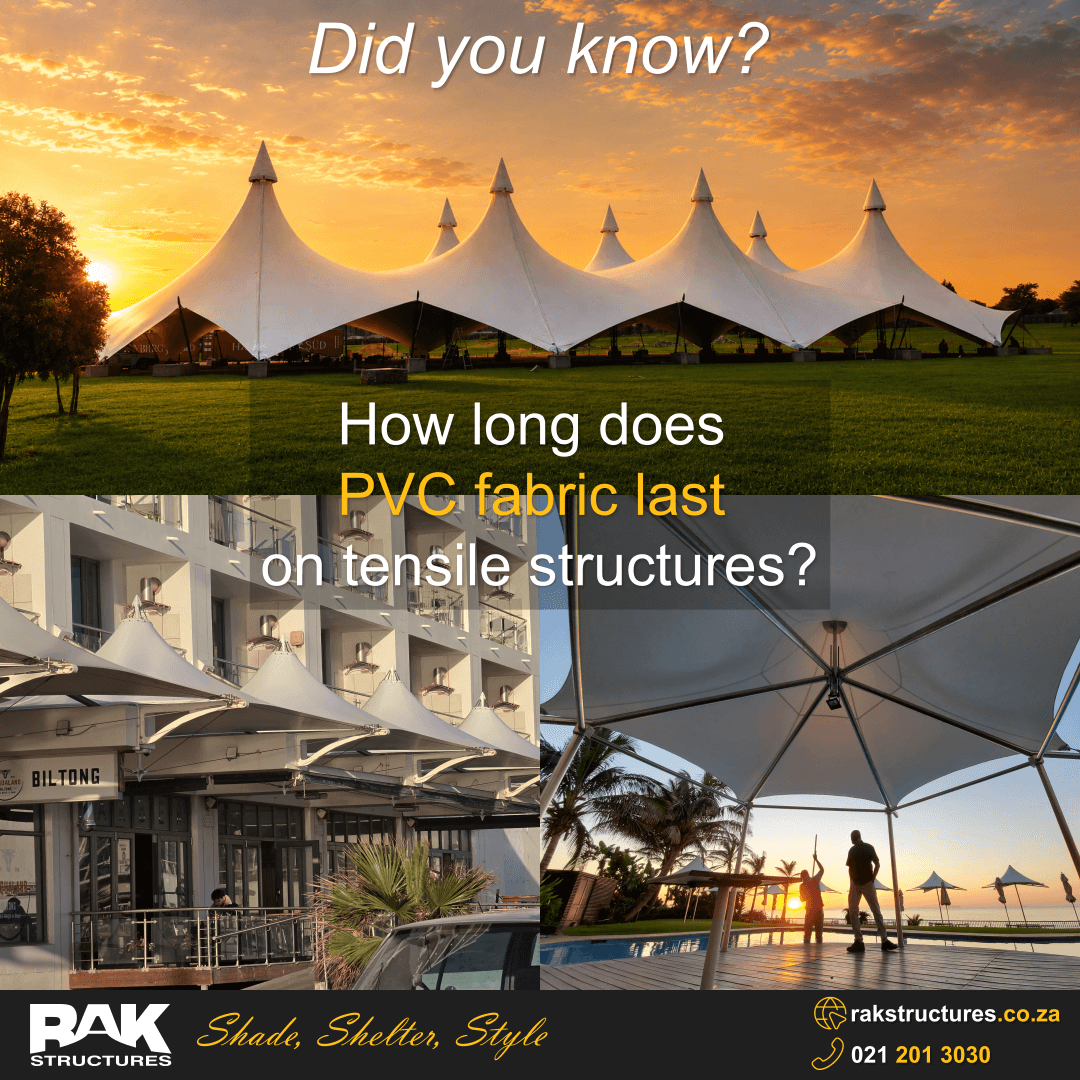
A tensile structure can be an impressive architectural feature, providing shade, shelter and weather protection while creating a distinctive visual identity for a property. But like any outdoor building material, its performance over time depends on the materials used, the environment and how well the structure is maintained.
When investing in a tensile structure, one of the most important questions to consider is how long the fabric will last.
The answer isn’t as simple as putting a fixed number of years on it.
PVC fabrics are available in different specifications, and the expected lifespan of a tensile membrane depends on how the fabric is specified, where the structure is installed, how it is used and how it is maintained.
For a permanent structure, a higher-specification PVC fabric with a PVDF coating on the outside and an acrylic coating on the inside can provide a lifespan of 10 years or more. However, this is not a universal lifespan for every PVC fabric or every application.
So, what actually affects the lifespan of a tensile structure?
Here are 7 key factors to consider.
1. The Specification of the Fabric
The first and arguably most important factor is the fabric specification.
PVC fabric isn’t a single, standardised product. Different fabrics have different base constructions, coatings, weights, strengths and intended applications.
A temporary structure that is erected and dismantled regularly doesn’t necessarily require the same fabric specification as a permanent architectural installation.
For a permanent structure, longevity becomes much more important. A higher-specification fabric can therefore be selected to provide the level of performance required over a longer period.
When selecting a fabric, factors such as the intended use, environment, expected lifespan, aesthetics, budget and warranty requirements should all be considered.
The right fabric isn’t necessarily the most expensive fabric. It’s the fabric that is correctly specified for the application.
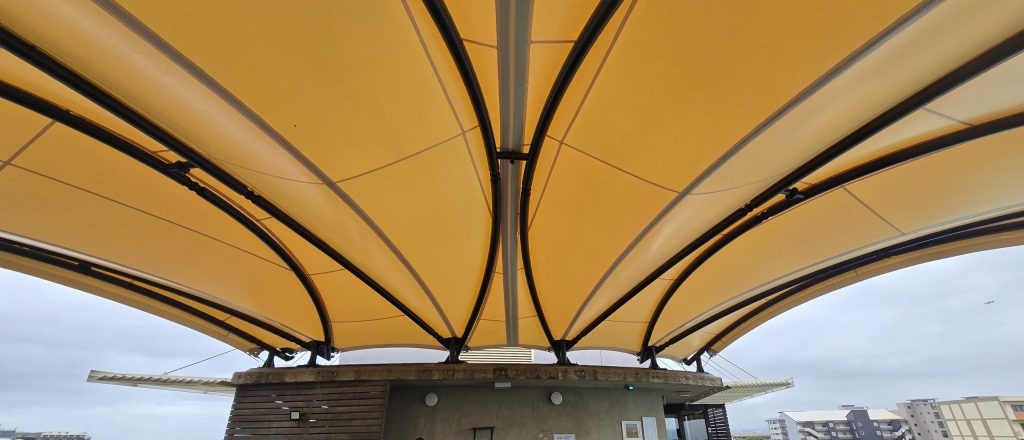
2. The Quality and Type of Coating
The coating applied to PVC fabric plays an important role in its performance.
Architectural PVC fabrics can have different finishing coatings, including acrylic and PVDF.
The finishing coat helps protect the fabric and reduces the friction of the outer surface. This is particularly useful because a smoother surface makes it more difficult for dirt to adhere to the membrane.
PVDF provides greater protection than acrylic and is particularly suited to applications where longevity and maintaining the appearance of the structure are important.
For permanent structures, a PVC fabric with PVDF on the outside and acrylic on the inside is a higher-specification option that can provide a lifespan of 10 years or more.
This is one reason why the specification of the fabric should be considered carefully before construction begins.
For more information on how PVC-coated polyester fabrics are engineered and how their coatings contribute to performance, see this overview from Fabric Architecture Magazine.
3. Exposure to UV and Sunlight
A tensile structure spends much of its life outdoors, which means exposure to sunlight is unavoidable.
Ultraviolet radiation can affect materials over time, making UV resistance an important consideration when selecting a fabric.
The amount of exposure will also depend on the location of the structure.
A Tensile Shade Structure installed in an area with intense sunlight will experience different conditions from one installed in a more sheltered environment.
This is particularly relevant to projects across South Africa, where strong sunlight is an important consideration when selecting materials for outdoor structures.
The fabric specification should therefore be matched to the environment in which the structure will operate.
4. Environmental Conditions
Sunlight isn’t the only environmental factor that can affect a tensile membrane.
Structures can be exposed to:
- Strong winds
- Rain
- Dust
- Humidity
- Temperature changes
- Coastal conditions
- Pollution
- Moisture
Wind is particularly important when specifying fabric.
Larger structures or structures located in exposed areas may require stronger or heavier fabric to deal with the loads placed on the membrane.
This is why the location and environmental conditions need to be considered during the design of a Tensile Membrane Structure.
The same fabric specification may not be appropriate for every location.
5. Fabric Weight and Weave
Another factor that affects the specification of PVC fabric is its weight and weave.
Architectural PVC fabrics are available in a range of weights, with examples including approximately 550gsm, 700gsm, 840gsm and 950gsm.
The base fabric can also have different weave constructions.
A higher-density weave can provide greater strength, while heavier fabrics may be required for larger structures or applications where additional strength is necessary.
However, heavier doesn’t automatically mean better or longer-lasting.
Fabric weight is just one part of the overall specification.
The base fabric, weave, coating, application and environmental conditions all need to be considered together.
6. How the Structure Is Used and Handled
The way a fabric structure is used can have a significant impact on the demands placed on the membrane.
A permanent architectural structure may remain in one location for many years, while a temporary structure may be repeatedly:
- Installed
- Dismantled
- Transported
- Folded
- Cleaned
- Stored
- Reinstalled
Repeated handling naturally creates different demands on the fabric.
This is why the expected lifespan and intended use of the structure should be established before selecting the fabric.
A fabric designed for a temporary application doesn’t necessarily need the same specification as one intended for a permanent installation.
Understanding how the structure will be used helps ensure the fabric is appropriate for the job.
7. Cleaning and Maintenance
The final factor is fabric structure maintenance.
Keeping a tensile membrane clean isn’t simply about making it look good.
Dirt can accumulate on the surface of the fabric and affect its appearance. On white fabric in particular, dirt can absorb heat that would otherwise be reflected by the clean surface.
The type of coating can help here.
A smoother, lower-friction surface makes it more difficult for dirt to stick to the fabric, which can help the membrane remain cleaner for longer.
However, cleaning also needs to be carried out appropriately.
Regular maintenance and inspections can help identify problems such as damage, worn areas or issues with connections before they become more significant.
Good maintenance won’t make a fabric last forever, but it can help protect the condition and appearance of the structure throughout its service life.
Serge Ferrari also highlights the importance of adapting maintenance to the fabric, its environment and the level of exposure it experiences.
So, How Long Does PVC Fabric Actually Last?
There isn’t one lifespan that applies to every PVC tensile membrane.
The expected lifespan depends on the fabric specification, coating, UV exposure, environmental conditions, fabric weight and weave, how the structure is used and how it is maintained.
For a permanent structure using a higher-specification PVC fabric with PVDF on the outside and acrylic on the inside, a lifespan of 10 years or more can be expected.
The important thing is that the fabric needs to be specified according to the application.
A temporary event structure, a permanent commercial shade structure and a large architectural tensile structure can all have very different requirements.
Choosing the Right Fabric for Your Tensile Structure
When planning a Tensile Structure, it’s worth looking beyond the initial cost of the fabric.
Consider:
- How long the structure needs to last
- Whether it is temporary or permanent
- Where it will be installed
- How much wind and weather exposure it will receive
- How frequently the fabric will be handled
- How important long-term appearance is
- What maintenance will be required
- What warranty is available
Getting these decisions right at the beginning can help ensure that the fabric is appropriate for the structure throughout its intended service life.
At RAK Structures, we can help you select the appropriate fabric and structural solution based on the requirements of your project.
Frequently Asked Questions
How long does PVC fabric last on a tensile structure?
There is no single lifespan for every PVC fabric. For a permanent structure using a higher-specification fabric with PVDF on the outside and acrylic on the inside, a lifespan of 10 years or more can be expected.
Does all PVC fabric have the same lifespan?
No. PVC fabrics differ in their construction, weight, coatings and intended applications. The appropriate lifespan therefore depends on the specific fabric and how it is used.
Does heavier fabric last longer?
Not necessarily. Fabric weight is only one part of the overall specification. The weave, coating, environment and intended use also influence the suitability and performance of the fabric.
Does sunlight affect PVC fabric?
Yes. UV exposure is an important consideration for outdoor tensile structures. The fabric should be selected according to the environmental conditions in which the structure will be installed.
Can tensile fabric be repaired?
Depending on the type and extent of damage, repairs may be possible. Having the structure inspected and maintained can help identify smaller problems before they become more serious.
How can I extend the life of a tensile structure?
Correct fabric specification, appropriate installation, regular inspection and suitable cleaning and maintenance can all contribute to the long-term performance of a tensile structure.
Conclusion
How long does PVC fabric last on a tensile structure?
The answer depends on much more than the material simply being labelled “PVC.”
The fabric’s specification, coating, UV exposure, environmental conditions, weight and weave, use and maintenance all play a role in its expected lifespan.
For permanent structures, selecting a higher-specification fabric with the appropriate protective coating can provide a lifespan of 10 years or more.
Ultimately, the goal isn’t to find the fabric with the biggest number attached to it.
It’s to find the right fabric for the job.
With the correct specification and appropriate care, a tensile structure can provide long-term shade, shelter and architectural impact for commercial, residential and public spaces across South Africa.
Planning a tensile structure? Contact RAK Structures to discuss the right fabric and structural solution for your project.