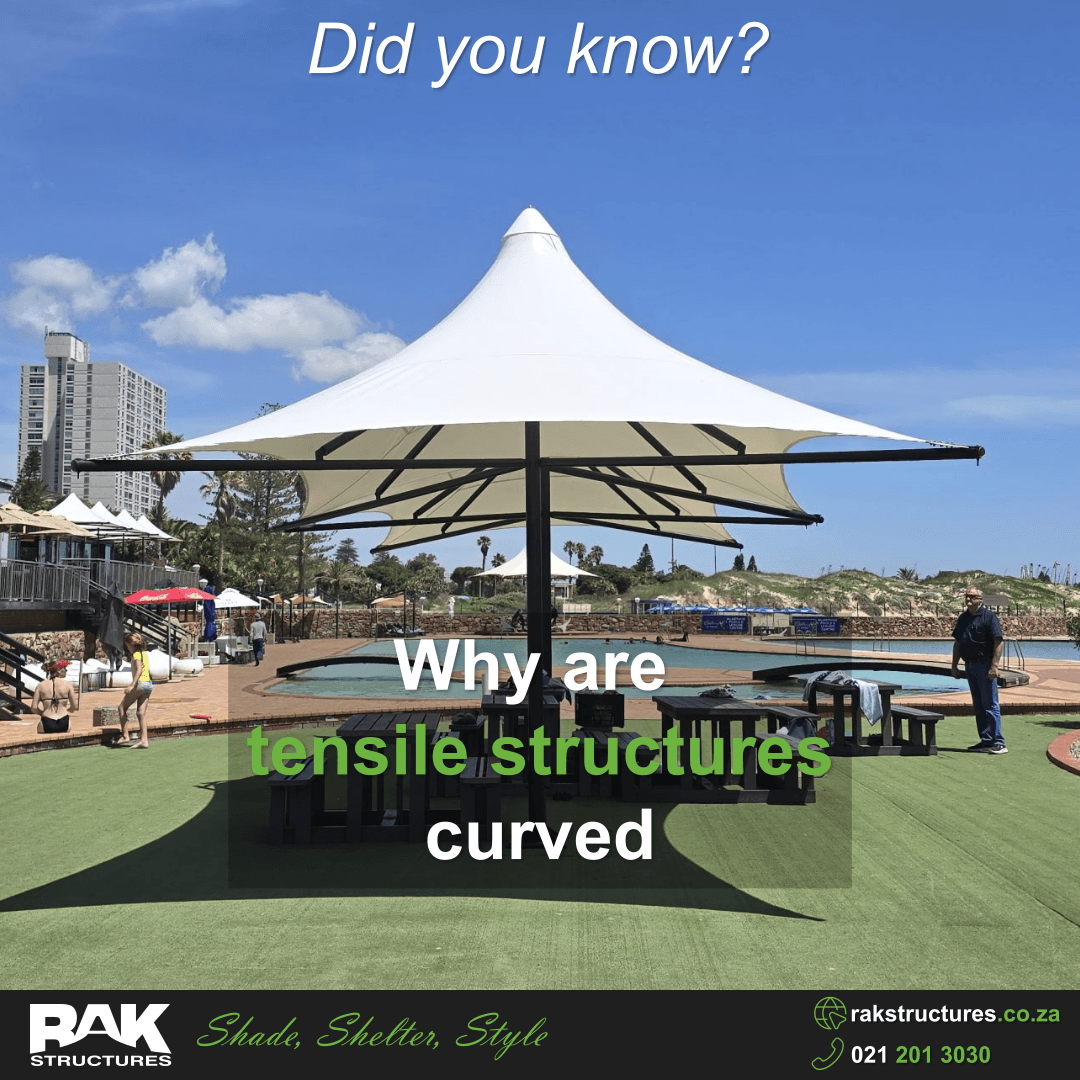
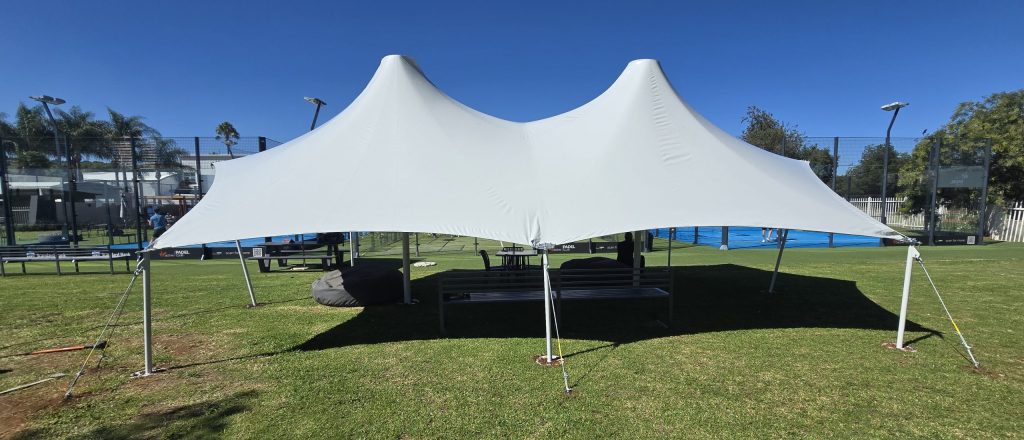
Tensile Structures. When people first see a tensile structure, one of the first things they notice is its elegant curves. Whether it’s a striking entrance canopy, a shaded seating area, or a large-span roof over a sports facility, the flowing shape often becomes an architectural feature in its own right. But those curves aren’t just about aesthetics. In fact, the distinctive form of a tensile structure is fundamental to its strength, stability, and long-term performance. Every curve is carefully designed by engineers to ensure the structure can withstand wind, rain, and the forces of nature while maintaining its shape for years to come.
Curves Create Strength
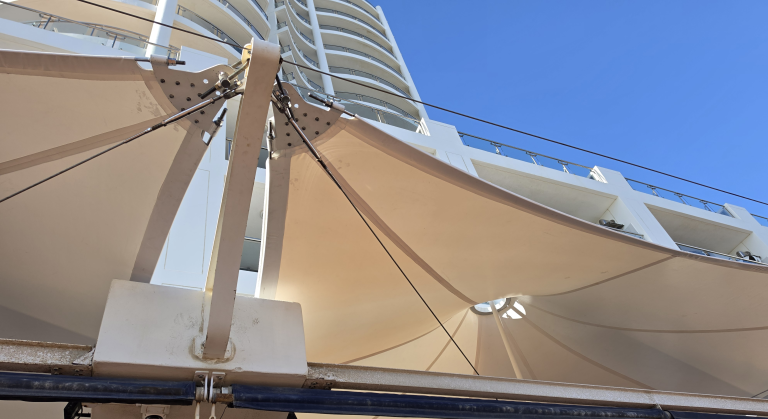
Unlike conventional roofs that rely on rigid beams to carry loads, tensile structures work by placing the fabric membrane under carefully controlled tension.
When the membrane is stretched between supporting steelwork and cables, it becomes remarkably strong. The curved surfaces help distribute loads evenly across the entire structure instead of allowing stress to build up in one location.
This even distribution of forces reduces the likelihood of deformation, extends the life of the fabric, and allows tensile structures to span large areas using surprisingly lightweight materials.
A Flat Fabric Roof Doesn’t Work
A common question is why tensile structures can’t simply have a flat roof.
The answer is simple: a flat membrane cannot maintain consistent tension.
Without curvature, fabric can:
- Sag over time
- Collect rainwater
- Flap excessively in strong winds
- Develop wrinkles that shorten its lifespan
- Experience higher stress in isolated areas
By introducing curves, engineers create a stable form that naturally resists these problems.
For readers interested in learning more about the different types of fabric structures, the Fabric Structures Association provides an excellent overview of the various membrane structure systems used around the world.
Designed to Handle Wind
Wind is one of the biggest design considerations for any outdoor structure.
Curved tensile membranes allow airflow to move more smoothly over and around the structure, reducing wind pressure and minimizing uplift forces. The continuous tension within the fabric also limits movement during high winds, helping the structure maintain its integrity under challenging weather conditions.
Every RAK Structures project is engineered according to the environmental conditions of its installation site, ensuring the design is suitable for the expected wind loads.
Rainwater Needs Somewhere to Go
The shape of a tensile structure also plays a critical role in water management.
The high and low points created by the curved design direct rainwater toward designated drainage areas. This prevents water from pooling on the fabric, which can add significant weight and place unnecessary stress on both the membrane and supporting framework.
Proper drainage is essential for maintaining the structure’s appearance and ensuring long-term durability.
Every Curve Is Carefully Engineered
While two tensile structures may appear similar, their geometry is rarely identical.
Engineers consider numerous factors before finalising a design, including:
- The size of the structure
- Intended use
- Local wind conditions
- Rainfall
- Span distances
- Foundation requirements
- Fabric type and weight
- Support locations
Using specialised engineering software and structural analysis, each membrane is designed to maintain the correct level of tension throughout its entire surface.
Where Architecture Meets Engineering
One of the reasons tensile structures have become so popular is their ability to combine functionality with striking visual appeal.
The flowing forms create landmarks that enhance commercial buildings, schools, resorts, sports facilities, shopping centres, and public spaces. Rather than hiding structural elements, tensile architecture celebrates them, turning engineering into a design feature.
The engineering of tensile membrane structures is supported by internationally recognized design standards, including those published by the American Society of Civil Engineers (ASCE) for membrane structures.
Why Choose RAK Structures?
At RAK Structures, every project begins with engineering.
Our experienced team designs, manufactures, and installs custom tensile membrane structures that are built specifically for each site and application. By combining proven engineering principles with high-quality materials and expert fabrication, we deliver shade solutions that are not only visually impressive but engineered for long-term performance
From concept and structural design through to manufacture and installation, we guide our clients through every stage of the process.
Conclusion
The curves of a tensile structure are far more than an architectural statement—they are the reason the structure performs so effectively.
They distribute loads, improve stability, enhance drainage, reduce wind effects, and maximize the lifespan of the fabric. Without these carefully engineered curves, tensile membrane structures simply wouldn’t perform as intended.
If you’re considering a tensile structure for your next project, working with experienced designers and engineers ensures your investment will deliver both exceptional performance and lasting visual impact.